|
Progress Rapid.....Tragedy Strikes
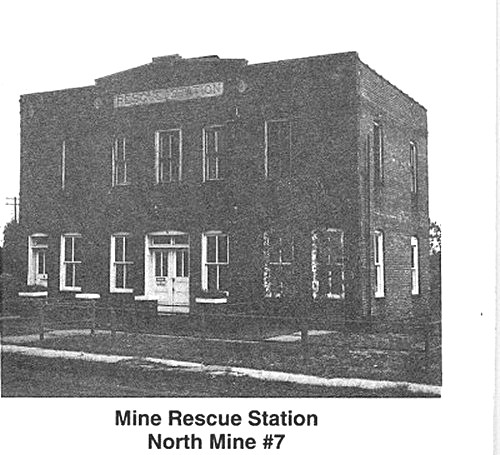
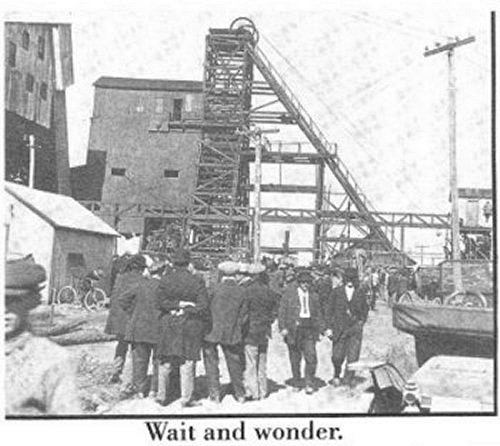
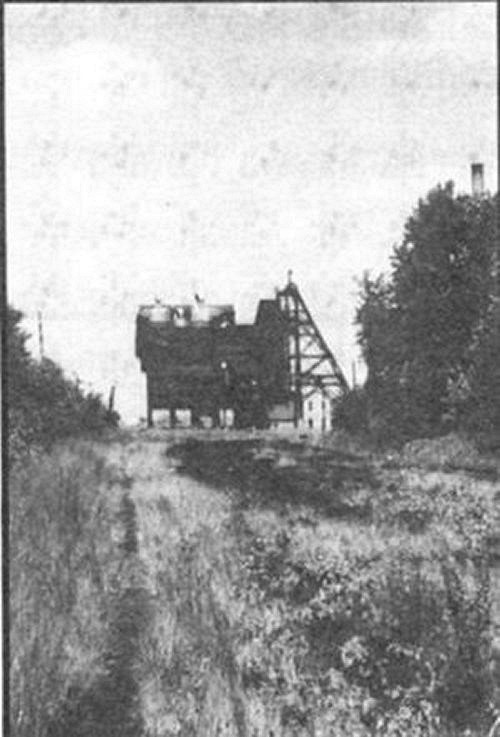
North Mine #7--Shaft Mine
Opened 1904--Closed 1952
Progress was rapid, but not always smooth. The UMWA was a great asset to the
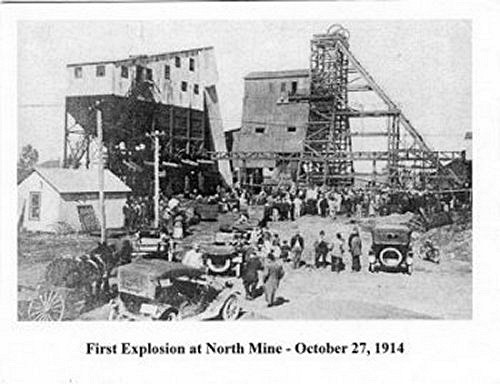
miners, but tragedy occurs. It came in the form of two explosions at North Mine #7, October 27, 1914, killing 52 miners, and September 28, 1918,
killing 21 miners.
A Miner's Memorial Service, begun in 1914, was attended each
year by Dr. A.W. Springs of Dewmaine, a small town near Colp.
He had saved
many lives in the 1914 disaster. Dr. Springs was
born in 1869. His mother died when he was six months old and
his father died when he was
seven years old. He finished the
third grade when he was the age of nineteen. Nevertheless, he
was a 1907 graduate of National Medical
University in Chicago.
He received a special written blessing from Pope Pius II for
his humanitarian accomplishments. Each birthday he
celebrated
by dressing in Indian headdress and moccasins and walked to Carterville
and back home. No one would race him; he was a fast runner
even
when 70 years old. He was part Negro and part Comanche Indian.
Description:
Trailer: This somber film shows the only remaining footage from the Royalton, Illinois mine disaster of 1914. The film shows a crowd gathering as covered bodies are carried onto an ambulance. The mine inspectors pose for pictures, men prepare crosses for the miner's graves, and horse and buggies carry mourners to the funeral.
|
SURVIVOR RECALLS DETAILS OF UNDERGROUND DISASTER AT
ROYALTON IN 1914
ARTICLE TAKEN FROM FRANKLIN TODAY PAPER
BY : Dianne Throgmorton
Southern Illinoisan Correspondent
Appeared in 1983
It was the first nice, clear, frosty morning they had that fall of 1914, October 27, a Tuesday much the same as usual at the Franklin County Coal Company's Mitchell Mine in Royalton.
The last cage was just going down into the mine, and as it started down, a second cage came up to ground level. The young company weighman, Walter Schmitt, got on the empty cage and rode up to the tipple. He went onto a big box to bring the checks in and stepped off into the weigh room.
There were 12 to 14 men on the last cage. Schmitt heard pieces of coal and debris
hitting the bottom of the cage and shouted, "Get off, fellows! Get off!"
Schmitt, now 92, graphically described the incident.
"They jumped off the sides and back and everywhere, and that smoke was just thick. It left a coating of coal dust over all the tipple and it went about 50 feet higher than the tipple and never spread out a bit. Just straight up - just dark, black smoke. "
Schmitt left his wife and 12-day-old baby at home that Tuesday to go to work, and it was late Friday night before he returned. The rescue crews worked straight through the days and nights that followed the death-dealing explosion, but the effort was worthwhile. .
Three hundred and thirty-seven men were down in the mine at the time, and though
52 lost their lives, the death toll could have been much higher.
Schmitt credits quick thinking for the number of survivors. "When the explosion occurred, they reversed the fans," he explained. "There were no man trips back then.
Every man walked in. It was before starting time, and they figured that no one yet had got to their work place. The miners were on the main line walking in, and the main line was the turn of the air. So we reversed the fans to put fresh air on the men that were going in.
"Some of the men on the bottom were already unconscious," added Schmitt. "They would have been dead in a half a minute, but when the fresh air hit them, they got another breath and they made it."
Schmitt believes that reversing the fans saved hundred of lives that day, just as he believes that the frosty October morning caused the explosion to be so violent. "The nice, cool weather came on, and the gas mixed with oxygen as it went down and caused a real explosion," Schmitt claimed.
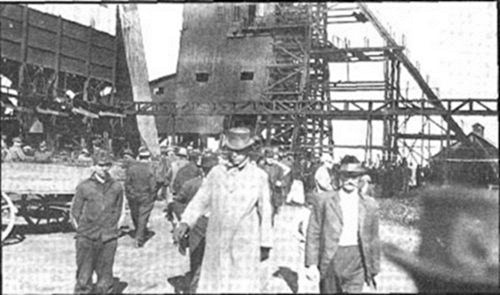
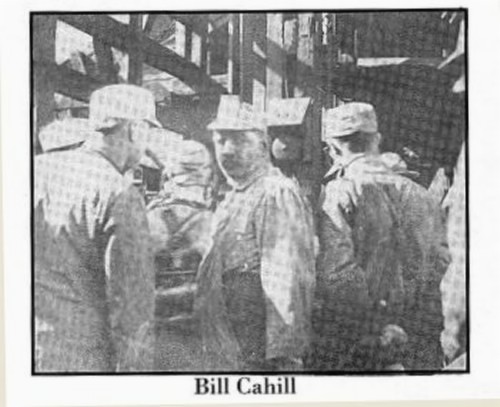
"The first rescue team arrived in a very short time," he said. "It was a team from Number Nine led by Dr. Springs, and he was the first and only doctor who went below to administer first aid to the crippled and wounded and help to bring them up.
"Nearly everyone in town was there - some sight-seeing, but all were scared to death.
Most everyone who lived in Royalton had someone down in the mine.
"I had to do all the identifying, you see, because I had all their check numbers and I knew lots of them. I identified some by their features, some by gold teeth, some by scars, some by the clothes they wore, and some by the check numbers they still had in their pockets. "There's no question about it. There wasn't a mistake made in the identification." The men couldn't be identified as they came up because they were covered with coal soot and some were badly burned.
Schmitt described the make shift morgue that was set up in a building near the mine. "They drilled holes in the floor and laid the bodies out and turned the hose on them to wash the coal soot off before they could be identified."
It had to be done that way because there were so many bodies that were unrecognizable and not enough room. As they were identified, the bodies were claimed by relatives and taken away.
"At one time," Schmitt recalled, "there were 32 hearses and wagons going out of
town at the same time on the road to Herrin".
Schmitt believes that the mines were fairly safe back then. Explosions weren't all that common. The only previous explosion that he could remember was at Number One mine in Zeigler in 1905.
Royalton was a growing town in 1914. Schmitt remembers that there were more stores than there are now. The mine was fairly new and everything was done by hand. Most hauling was done by mule.
When J. L. Mitchell first opened the mine in 1908, there were not enough workers, so he recruited men from Arkansas and Alabama and brought them up on the Iron Mountain Railroad which ran through Royalton.
Finally, Schmitt recalls, workers were arriving faster than jobs were available, so Mitchell built a long building to feed and house the new men until a place opened for them in the mine.
There were many workers of Russian descent, and when Russian holidays came along there would be so much absenteeism that the mine would have to blow over work that day.
The Russian Orthodox Church, when completed, was dedicated to the Russian
miners who lost their lives in the explosion of 1914.
Schmitt was still working at the mine when a second explosion occurred on
September 28,1918 - but he missed that one by one night.
"I was working below then with the electricians," he recalled" and a fellow by the name of Noah Stevens worked with me. We had worked the night before. They were wanting the power cut off and said "Go get Walter and Noah Stevens to cut the power off." But someone spoke up and said, "No, they worked last night. Get somebody else." They got a fellow named Dittlerline, and he started into the mine. He just got halfway in when the thing exploded and killed him."
Asked if any other survivors of the 1914 explosion are still around, he said, "Don't know another one. "
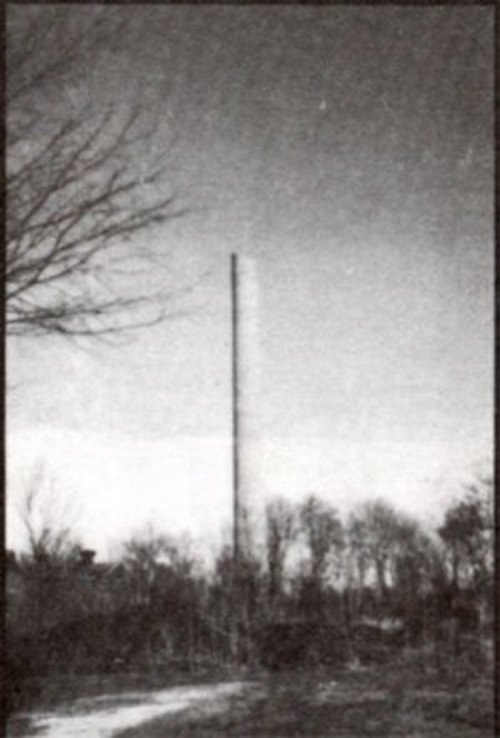
The mine continued to operate until 1952 when it was closed permanently. The old smoke stack is still standing at the north edge of Royalton and can be seen from Illinois 149, which runs through the town. It's shorter now, and deteriorating, but still a silent reminder of days gone by.
 |
 |
   |
|